

Carpets based on Fibre
Fibre is the basic entity of any textile product. It signifies the weather the textile product is useful for.
Know More
Fibre is the basic entity of any textile product. It signifies the weather the textile product is useful for.
Know More
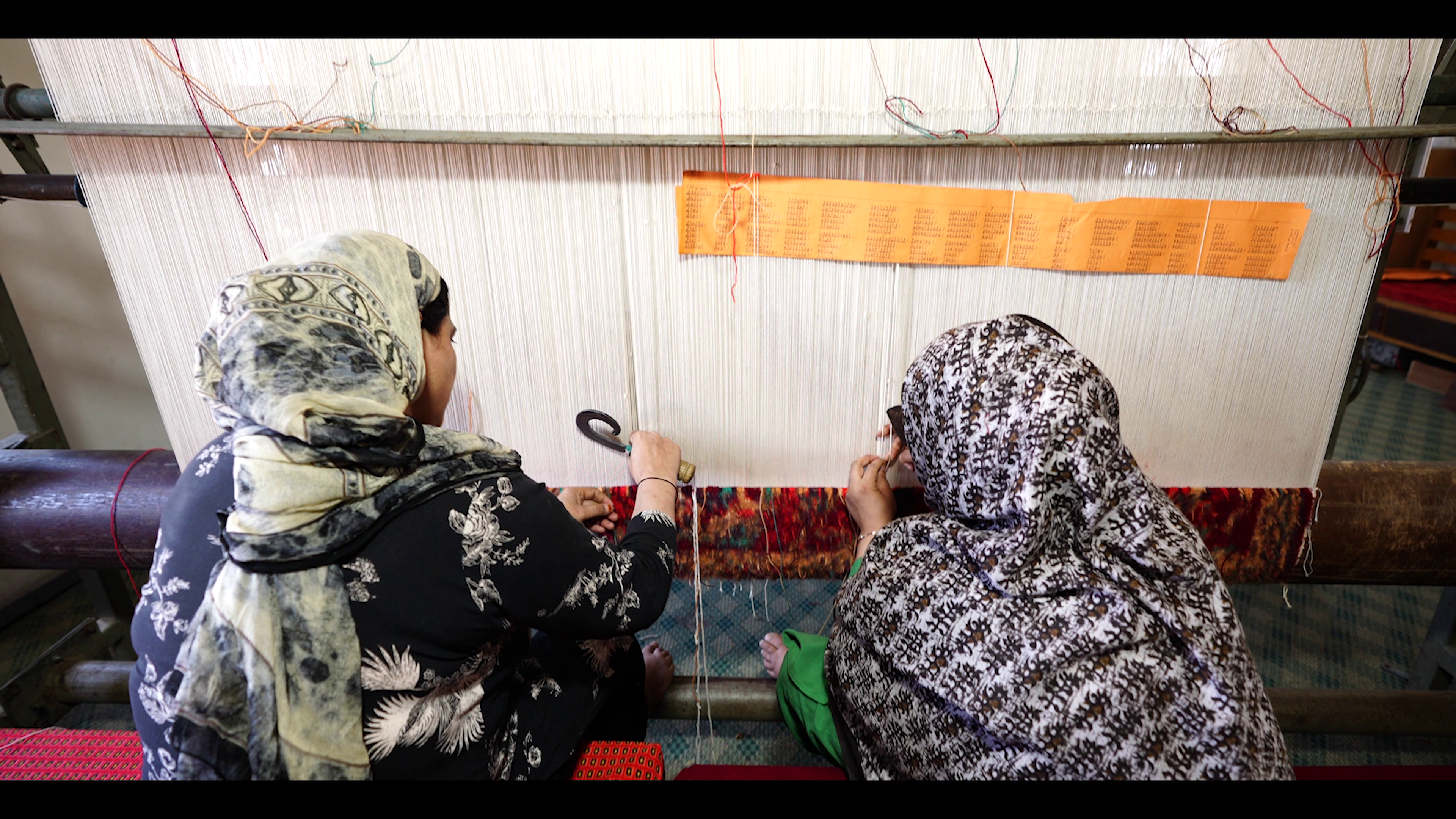
Carpet Weaving is done by three main methods. HandKnotting, HandWeaving HandTufting.
Know More



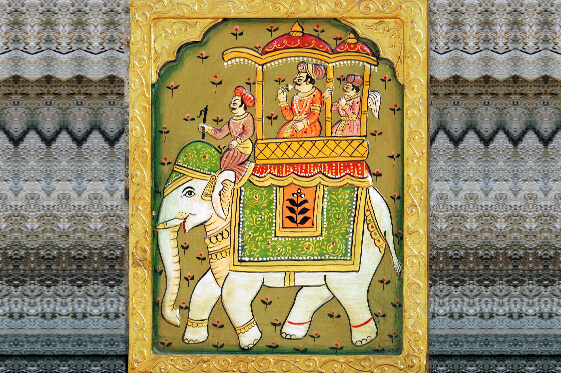
The pile carpet, which came to India in the reign of Akbar in 16th century. Akbar brought certain Persian carpet weavers to India and established them in India. The art grew and flourished here and it was modified as per the royal tastes and mixed with the Indian arts. The Persian carpets were thus re-created in Indian forms.
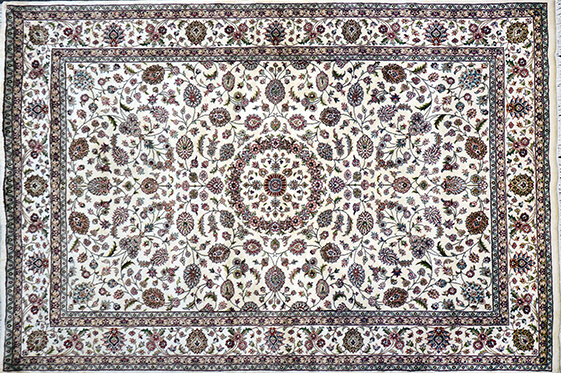
Used cotton warp and wool pile and a variety of color scheme had multiple shades of blues, greens, and other colors on a red and peach base. The patterns were a reworked copy of Persian style but later modified to Indian tastes.
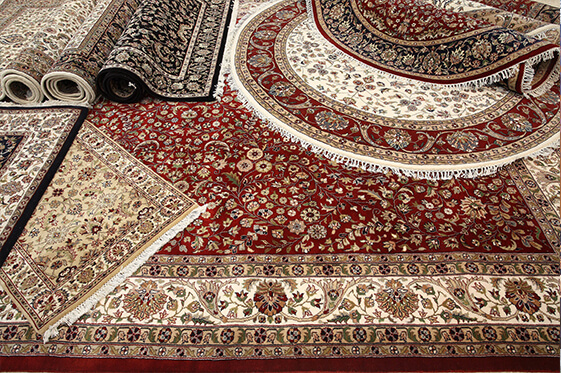
Materials like silk and pashmina were used that permitted greater number of knots to be included in the art works. Patterns of these Indian carpets resembled miniature paintings. Subtle gradations and shadings with yarns were themselves artistic. The patterns of these carpets were a reflection of manuscript paintings. The history of Indian Carpets show technically refined taste in both design and construction. The carpets had scrolling vines, flowering plants, and more naturalistic animals in pictorial or overall pattern.
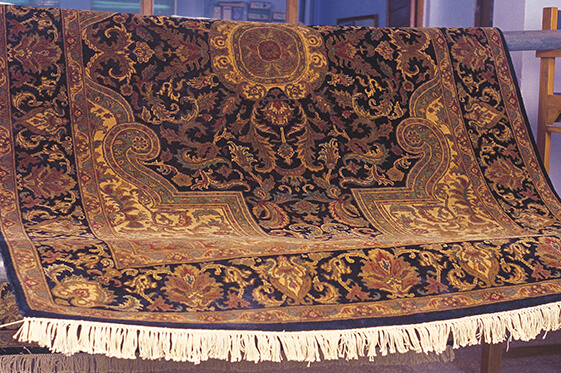
Warps and wefts of fine silk yarns incorporated as many as 2,000 knots per square inch. Silk or pashmina piles gave the carpets a velvety like texture. Yarn shading was as stylish as in Jahangir`s reign. Flowers were still the primary elements of design. During this era, the patterns were primarily floral all over with at times geometric or calligraphic trims. Chinese and European patterns also influenced the history of Indian carpets in their own way. Calligraphy influenced the carpet craft as it did the other crafts in India. Though like all other crafts, carpet making also saw a downfall for sometime, but the craft sustained in the traditional families.
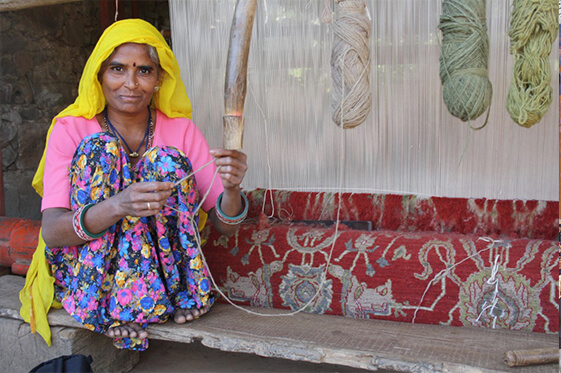
By the end of eighties their total number reached about 48000 people. This remarkable expansion of the carpet industry is mainly due to the programme of massive training introduced and sponsored by the All-India Handicraft Board. Under this programme numerous groups of girls have been trained that started a new development in job market of Kashmir. Another healthy sign of carpet industry`s growth has been its movement from the city of Srinagar to rural and semi-urban areas.
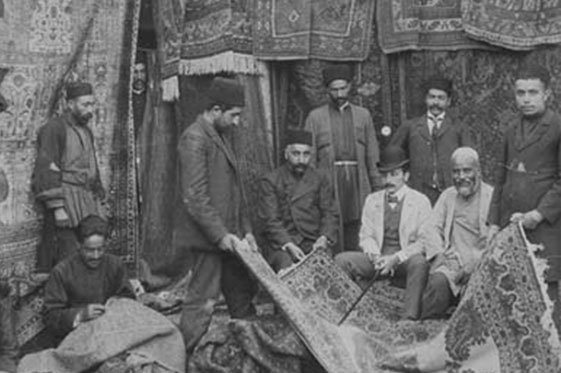
The Industry has grown tremendously since then. The modern designs have become a huge success in Hand Knotted and Hand Tufted Carpets. Indian carpets have been recognised in World Market. Many Indian Exporters have been awarded prestigious awards for Design Innovation.

30 June - 03 July 2026 , Mumbai , India

1 - 4 July 2026 , Morocco , Morocco

15 - 17 July 2026 , Melbourne , Australia
15 - 19 July 2026 , Qinghai , China

11-13 August 2026 , Sao Paulo , Brazil

5 - 9, September 2026 , Denmark , Denmark

6 - 9 September 2026 , Birmingham , UK

16–17, September 2026 , Munich , Germany

22 - 24 September 2026 , Moscow , Russia

28 - 30, September 2026 , Dubai , UAE

4 - 6 October 2026 , Bhadohi Uttar Pradesh , India

17 - 21 October 2026 , North Carolina , USA

17 - 19 November 2026 , Saudi Arabia , Saudi Arabia

17 - 19 November 2026 , Melbourne , Australia

13 - 16 January 2027 , Frankfurt , Germany

February 2027 , Birmingham , United Kingdom

It is a matter of great honour and privilege to assume the role of Chairman of the Carpet Export Promotion Council (CEPC). I extend my sincere gratitude to all members of the Committee of Administration and the carpet fraternity for placing their trust and confidence in me.
India’s handmade carpet industry stands as a symbol of our rich heritage, exceptional craftsmanship, and global reputation. As Chairman, my foremost priority is to strengthen this legacy by fostering growth, enhancing global outreach, and creating greater opportunities for our weavers, artisans, and exporters.
The Council will actively advocate for the industry before the Government, ensuring that the concerns, aspirations, and needs of our members and artisan community are strongly represented. With the continued support of the Government, we are confident of bringing new heights of growth and recognition to the Indian handmade carpet sector.
We remain committed to expanding international market access, promoting innovation and design development, and ensuring that our exporters receive the support required to remain competitive on the world stage. CEPC will continue to strive towards being more responsive, transparent, and member-centric in all its initiatives.
I look forward to working closely with all stakeholders to take the Indian handmade carpet industry to greater heights of success. Together, we will create a stronger global presence, increased export potential, and sustainable development for our artisan community.
Shri Mukesh Kumar Gombar
Chairman, CEPC
...